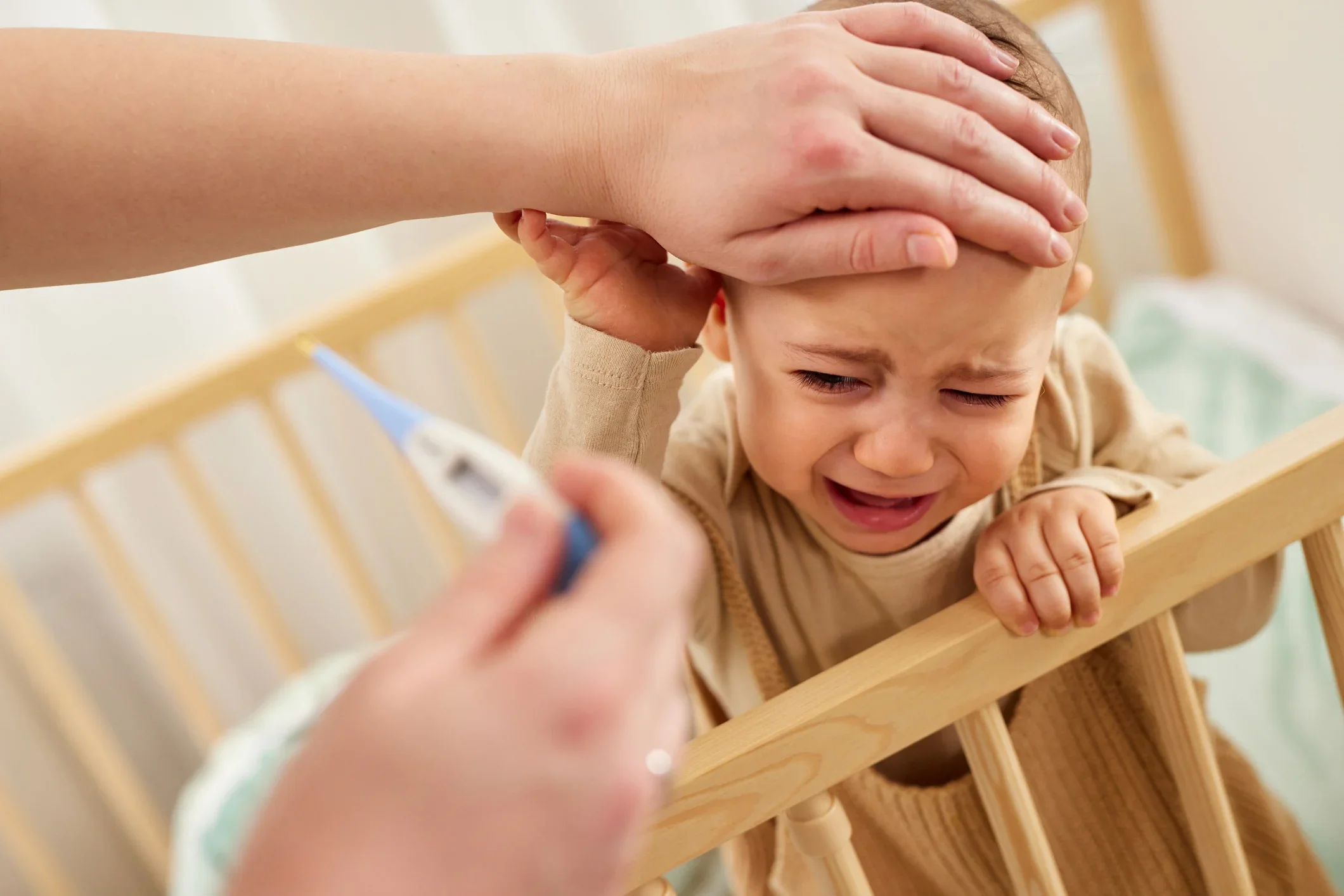
Most of what's in your medicine cabinet isn't safe for a child under 2, and the safe options are fewer and simpler than you'd think.
Babies and toddlers catch an average of 6 to 8 colds a year, and most of them peak between October and March. When your little one is stuffy, coughing and miserable at 2 a.m., it's natural to want to do something. But young children process medicines differently than older kids and adults, and doses that look small can still be too much. Here's a clear guide to what helps, what to skip, and when to call for help.
This post is general information, not medical advice. Always check with your child's pediatrician before giving any medicine.
What NOT to give a child under 2
Over-the-counter cough and cold medicines. The FDA advises against these for children under 2 because of the risk of serious side effects, including fast heart rate, seizures and slowed breathing. The American Academy of Pediatrics (AAP) recommends avoiding them until at least age 4. This includes decongestants, antihistamines and cough suppressants, alone or in "multi-symptom" combos.
Aspirin. Never give aspirin or products containing salicylates to children or teens with a viral illness. It's linked to Reye's syndrome, a rare but life-threatening condition affecting the liver and brain. Check labels: some stomach and "pain relief" products contain it.
Honey, if your baby is under 12 months. Honey can carry spores that cause infant botulism. After the first birthday, a small spoonful of honey can actually soothe a cough.
Adult or children's medicine dosed by guesswork. Don't cut adult tablets or estimate a dose. Use only infant or children's formulas, measured with the syringe or cup that came in the box.
Vapor rubs on babies under 2. Camphor and menthol rubs can irritate young airways. Look only for products labeled for infants, and ask your pediatrician first.
Antibiotics for a cold or flu. Colds and flu are viruses, and antibiotics don't touch them. Only use antibiotics your pediatrician prescribes for a bacterial infection.
What you CAN give (and do)
For most colds, comfort care is the treatment. Fever reducers are fine at the right age and dose, which should always be based on your child's weight, not age.
Fever reducer
Youngest age
Notes
Acetaminophen (Tylenol)
Any age, but under 3 months call your pediatrician first
Every 4 to 6 hours as directed; no more than 5 doses in 24 hours
Ibuprofen (Motrin, Advil)
6 months and older
Every 6 to 8 hours as directed; give with food if possible; avoid if your child is dehydrated or vomiting
Never give both at once or alternate them unless your pediatrician tells you to. A fever by itself is the body fighting infection; treat it when your child is uncomfortable, not just to bring a number down.
Comfort care that works:
Saline drops or spray loosen mucus. Follow with a bulb syringe or nasal aspirator, especially before feeds and sleep.
A cool-mist humidifier in the bedroom eases congestion. Clean it daily; skip warm-mist units, which can cause burns.
Extra fluids. Offer breast milk or formula more often. After 6 months, small sips of water help too.
Rest and closeness. Extra cuddles and naps are real medicine for a sick toddler.
Honey after age 1. Half a teaspoon to a teaspoon before bed can calm a nighttime cough.
Safe sleep, always. Don't prop up a baby's crib mattress or use pillows to help with congestion. Keep babies on their backs on a flat, firm surface.
When to call the doctor
Trust your instincts: you know your child best. Call your pediatrician if your child has:
A temperature of 100.4°F (38°C) or higher in a baby under 3 months (call right away, day or night)
A fever over 104°F (40°C) at any age, or a fever lasting more than 2 to 3 days
Fewer wet diapers than usual (fewer than 4 in 24 hours), a dry mouth or no tears when crying
Ear pulling, unusual fussiness or symptoms that improve and then suddenly get worse
A cough lasting more than 2 weeks, or cold symptoms lasting more than 10 days
Go to the ER or call 911 if your child is struggling to breathe (ribs pulling in with each breath, flaring nostrils, grunting), has blue or gray lips, is very hard to wake, has a seizure, or seems limp and unresponsive.
Prevention beats treatment
Flu shot for everyone 6 months and older, including parents, siblings and caregivers. Babies under 6 months are too young for the vaccine, so the people around them are their protection.
Ask about RSV protection. Your pediatrician can tell you whether your baby qualifies for an RSV antibody shot, or whether a maternal vaccine during pregnancy already covers them.
Wash hands often, especially before feeding and after diaper changes, and ask visitors to do the same.
Keep sick visitors away, and limit crowded indoor spaces for young babies during peak season.
Clean shared toys and surfaces regularly, especially in daycare or playgroup settings.
Cold and flu season with a little one is exhausting, but most illnesses pass in a week or two with rest, fluids and lots of love. When in doubt, call your pediatrician: no question is too small when it comes to your baby's health.