From Only Child to Big Sibling: Preparing Your Firstborn for Baby #2
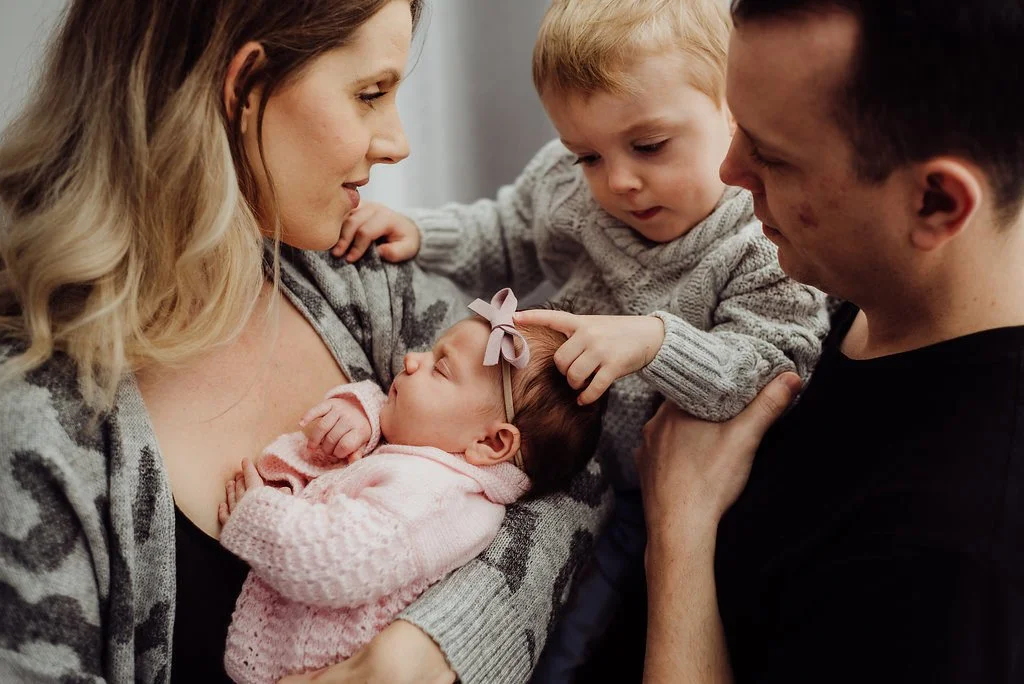
We talk a lot about sleep transitions. But one of the biggest transitions your family will face isn't just about getting a newborn to sleep through the night. It's about helping your firstborn adjust to a huge shift in their world.
We've worked with thousands of families navigating this exact moment. The parents who are excited about baby number two but worried about their toddler, who's never known anything but undivided attention. The ones lying awake at night (ironically, the last peaceful nights they'll have for a while) wondering: how do we prepare our child for the biggest change in their life.
The Conversation That Actually Matters
One parent we worked with, Sarah, told us her biggest fear: "I kept rehearsing this perfect speech about becoming a big sister. My daughter looked at me like I was speaking another language."
Kids smell inauthenticity from a mile away. The real questions aren't about bottles or diapers. They're deeper: "Will you still read me stories?" "Can the baby play with my stuffed animals?" "What if you love the baby more?"
That last question is the one that keeps parents up at night. Sarah didn't dismiss it with platitudes. She told her daughter that love multiplies, not divides. But more importantly, she showed her. Bedtime stories stayed non-negotiable. Saturday morning pancake tradition with Dad continued throughout the pregnancy. Consistency really matters to toddlers.
The routine protection wasn't just good parenting. It was a survival strategy. Because when everything else changes, those anchors become lifelines for your firstborn.
What We've Seen Work (And What Flops)
Through our work with families, we've noticed patterns in what helps and what doesn't.
The approaches that work:
Physical connection with the pregnancy creates real understanding. When toddlers feel the baby kick, something clicks. They'll put their hand on mom's belly and wait, suddenly quiet and focused. Those moments make the baby real in a way no picture book can.
We also see parents make a crucial mistake: constantly calling their firstborn "the big girl" or "the big boy." They're still little. Still need you. That pressure to suddenly be mature backfires spectacularly, usually around the third trimester when your three-year-old has a meltdown because their sock feels weird. They're still toddlers. They need permission to stay little.
The approaches that miss:
Buying a baby doll to "practice" rarely works the way parents hope. Most kids aren't interested in pretending to be parents. They want to be kids. One mom told us she donated the practice doll after two days and just let her son be himself instead. His adjustment went much smoother after that.
Hospital visit plans also tend to go sideways. Kids get scared seeing mom looking tired or different in a hospital bed. If you're planning a hospital meeting, prepare your child for how things might look and feel, not just the exciting moment of meeting the baby. Here’s what that could look like:
Let them know ahead of time that mom might look tired, be resting in bed, or have tubes and monitors. None of it is scary. It’s part of healing.
Explain that hospitals have unfamiliar sounds, smells, and routines, and that it’s okay if it feels a little weird at first.
Give them a role. Holding a drawing, helping pick a song, or standing close can help them feel safe and included.
The Stuff Nobody Warns You About
The regression is real and it's hard. We hear this from parents constantly. The child who'd been potty trained for a year suddenly has accidents. They want to be held constantly. They baby-talk when they're perfectly capable of speaking clearly.
One pediatrician we spoke with said something that shifted our entire approach: "They're not going backward. They're checking to see if you'll still love them when they're not perfect."
So the advice we give families now: hold them. Clean up accidents without frustration. Let them drink from a sippy cup again if they want to. This phase is temporary, but your response to it matters long-term.
After Baby Arrives: The Real Adjustment
Here's what parents tell us about those first two weeks: they're rougher than expected. Not because of the newborn (if it's your second, you've done this before) but because of watching your firstborn navigate their new reality.
"She'd ask to hold the baby, then thirty seconds later want him to go back in my belly," one mom shared with us. "She loved him and resented him, sometimes within the same minute."
What helps most is protecting one-on-one time with your firstborn like it's oxygen. One parent takes the baby for an hour so the other can do something, anything, alone with the older child. Sometimes it's just sitting and watching their favorite show together. The activity matters less than the undivided attention.
One family shared a game-changing tip: they stopped whispering around the baby during their toddler's activities. Their house had always been loud and active, and they kept it that way. The baby learned to sleep through toys and music, which meant they didn't have to suddenly shush their toddler in their own home. Small shift, massive impact on family dynamics.
The Unexpected Gift
Around the four-month mark, families tell us something shifts. The older sibling starts singing to the baby when they cry. Not because anyone asked them to, but because they want to. They bring toys (not always age-appropriate, but the thought counts). They start saying "our baby" instead of "the baby."
It's not a Hallmark card. Older siblings still get frustrated when the baby grabs their hair or when they can't do something because of the baby's nap schedule. But something is growing between them that's entirely theirs. A language of inside jokes and shared looks that parents aren't part of.
And that's exactly how it should be.
What We Tell Every Family Going Through This
You're going to feel guilty. Guilty that you're "taking away" your firstborn's only-child status. Guilty when you can't give the baby the same focused attention you gave your first. Guilty when you're exhausted and short-tempered with both of them.
But here's what that guilt misses: you're not taking anything away. You're giving them each other. A built-in friend, ally, and occasional nemesis. Someone who will know them their entire lives in a way no one else can.
Your job isn't to make the transition seamless (it won't be). It's to hold space for all the complicated feelings, yours and theirs, while you figure out how to be a family of four instead of three.
The adjustment period is messy. Your firstborn might surprise you with both their resilience and their struggles. There will be moments you question everything and moments where you see them gently touch the baby's hand, and your heart could burst.
And eventually, without you noticing exactly when, your only child stops being an only child. They become siblings. And your family finds its new normal, louder and more chaotic than before, but somehow more complete.
We support families through every sleep transition, from bringing the baby home to helping siblings adjust to sharing space and attention. Because well-rested families are happier families, even in the beautiful chaos of growing from three to four.