Recognizing Postpartum Anxiety vs. Depression: Signs, Symptoms, and Where to Get Help
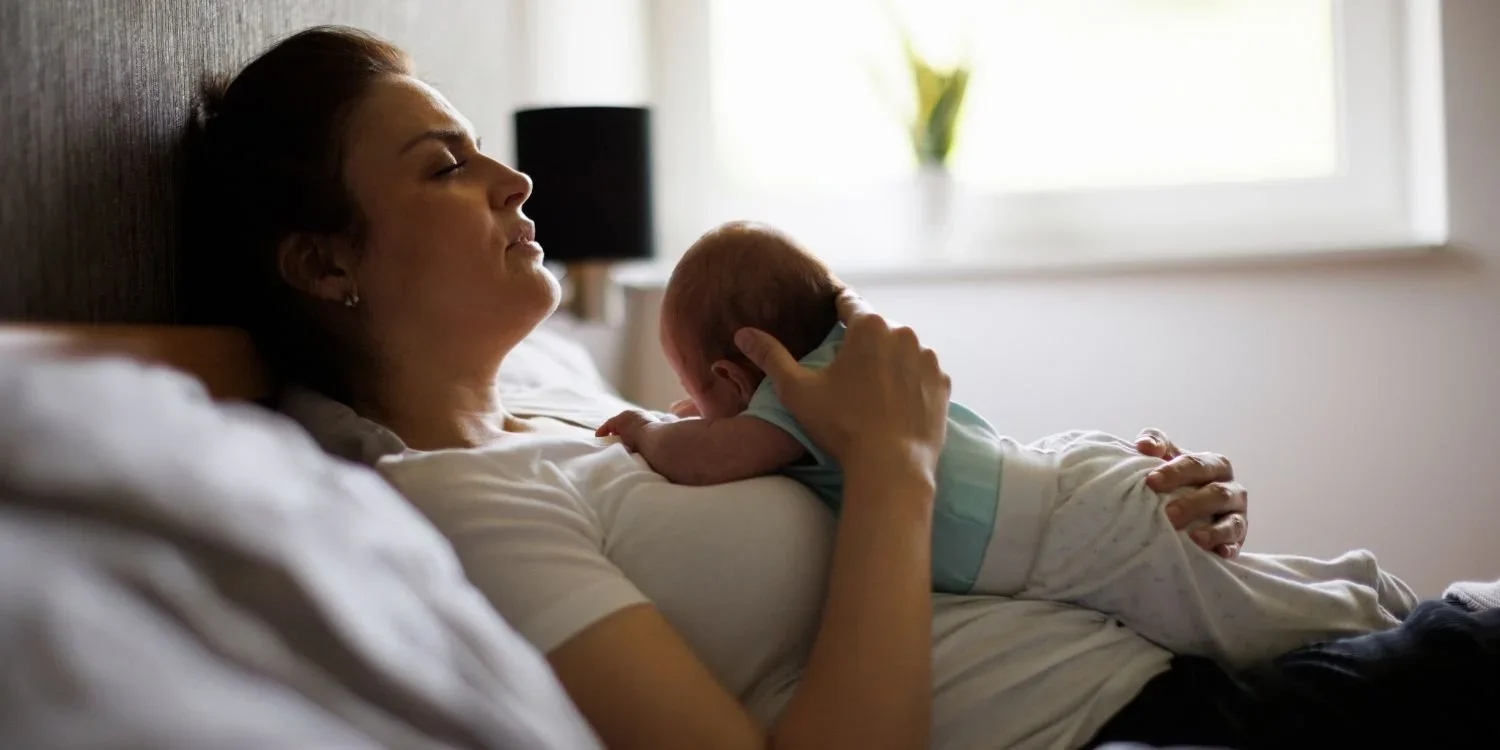
If you're a new parent lying awake at 3 a.m. running through everything that could go wrong or if you're so exhausted and numb that even holding your baby feels like it's happening to someone else you are not broken, and you are not alone. What you're feeling has a name, and it has help.
At Rested, we sit with families in the rawest, most tender weeks of new parenthood. We see the version of postpartum that doesn't make it into the baby books: the racing thoughts, the tears that come out of nowhere, the guilt for feeling anything other than joy. So let's talk honestly about two of the most common and most commonly confused experiences of the postpartum period: postpartum anxiety and postpartum depression.
They're Not the Same Thing
Postpartum depression (PPD) and postpartum anxiety (PPA) are both incredibly common , PPD affects roughly 1 in 7 new parents, and PPA is thought to be just as prevalent, if not more so. But they don't always look the same, and a lot of parents (and even some providers) miss postpartum anxiety because it doesn't fit the picture most of us have of "postpartum depression."
Postpartum depression often shows up as:
A persistent sadness, emptiness, or numbness that doesn't lift
Losing interest in things you used to enjoy, including your baby
Feeling worthless, hopeless, or excessively guilty
Sleeping too much or too little, even when you have the chance to rest
Trouble bonding with your baby
Withdrawing from your partner, friends, or family
Postpartum anxiety often shows up as:
Racing, intrusive thoughts often about your baby's safety
A constant sense of dread or feeling like something bad is about to happen
Physical symptoms: a racing heart, nausea, dizziness, shortness of breath
Difficulty sitting still or "switching off," even when your baby is sleeping safely
Obsessively checking on the baby, or needing everything to be done a certain way
Trouble sleeping even when you're utterly exhausted, because your mind won't quiet down
Many parents experience both at once. It's also common for PPA to be mistaken for "just being a vigilant new parent" which is exactly why it goes undiagnosed so often. Worry is normal in early parenthood. When it's relentless, exhausting, and interfering with your ability to function or rest, it's worth naming as something more.
Why It Matters to Catch the Difference
Anxiety and depression can call for different kinds of support, and naming what you're actually experiencing helps you and the people caring for you get you the right kind of help faster. A parent white-knuckling through intrusive, anxious thoughts needs something different than a parent who feels flat and disconnected. Neither needs to be told to "just relax" or "enjoy this time" advice that, however well-meaning, can make things worse.
Where to Get Help
Start with your OB, midwife, or your baby's pediatrician. Postpartum mood and anxiety disorders are medical, treatable conditions not a personal failing. Screening is a normal part of postpartum care, and you're allowed to bring it up even if no one asks.
Reach out to Postpartum Support International (PSI) at 1-800-944-4773, or text "Help" to 800-944-4773. They also maintain a directory of specialized therapists by location.
If you're in crisis or having thoughts of harming yourself or your baby, call or text 988 (Suicide & Crisis Lifeline) right away. This is available 24/7, and reaching out is the strongest thing you can do.
Lean on your care team. Whether it's a partner, a family member, or the doula or infant care specialist supporting your household, you don't have to carry this alone and you shouldn't have to.
How Rested Supports Families Through This
This is a lot of why we do what we do. A postpartum doula or infant care specialist in your home isn't a luxury it's a layer of support that lets you actually sleep, actually eat a warm meal, actually have a moment to notice how you're feeling instead of just surviving until the next feed. Our caregivers are trained to recognize the signs of postpartum mood and anxiety disorders, and to gently encourage families toward professional support when it's needed without judgment, and without making you feel like one more thing is "wrong" with you.
If you're struggling, please hear this: recognizing that something feels off is not a failure. It's the first and bravest step toward feeling like yourself again. And you deserve support that meets you exactly where you are.
If you or someone you love is navigating the postpartum period and could use extra hands, extra rest, or just someone in your corner, reach out to Rested, we're here for it.