
Hey mama.
First off, let’s just take a breath. You did it. You grew a whole human being, went through the marathon of labor (or the intensity of surgery), and now you’re home. You’re likely wearing mesh underwear, your hair hasn't seen a brush in forty-eight hours, and you’re probably running on three hours of interrupted sleep and half a cold granola bar.
We talk so much about the nursery, the stroller, and the birth plan, but then the "Fourth Trimester" hits like a freight train, and suddenly the focus shifts entirely to the baby. But here’s the real talk: your body just went through a major medical event. You are healing. And you cannot pour from an empty cup, especially when that cup is literally depleted of iron, collagen, and hydration.
If you’ve been searching for a postpartum recovery diet that doesn't feel like a restrictive "bounce back" program (ugh, eye roll), you’re in the right place. We’re talking about healing after birth nutrition that actually supports your hormones, your energy, and your mood.
The Myth vs. The Reality of Postpartum Healing
The Myth: You should focus on "getting your body back" immediately and sticking to a low-calorie diet to shed pregnancy weight.
The Reality: Your body is in a state of deep repair. Restricting calories or nutrients now can actually tank your milk supply, lead to extreme fatigue, and even worsen postpartum depletion. Your goal isn't to shrink; it's to rebuild.
Postpartum is a season of replenishment. Whether you had a vaginal delivery or a C-section, your tissues need specific building blocks to knit themselves back together. If you're in the thick of it and feeling overwhelmed, remember that reaching out for help: whether it’s a friend bringing a meal or hiring a postpartum doula atlanta to help manage the house: is a sign of strength, not a failure.

Why Nutrition Matters (More Than You Think)
When we think about overnight newborn care, we usually focus on the baby’s sleep. But what about the mom’s recovery while the baby sleeps? Your nutritional needs are actually higher now than they were during pregnancy, especially if you are breastfeeding.
Your body is working overtime to:
Heal the placental site (which is essentially an internal wound the size of a dinner plate).
Regulate your hormones as they take a massive nosedive after birth.
Produce nutrient-dense milk.
Repair stretched or torn tissues.
Without the right best foods for postpartum healing, you might find yourself feeling "wired but tired," experiencing intense brain fog, or feeling emotionally fragile.
The Core Elements of a Postpartum Recovery Diet
In many traditional cultures, the first forty days after birth are spent in "confinement": not as a punishment, but as a period of intense nourishment. The focus is always on warm, easy-to-digest, and nutrient-dense foods.
1. Warming Foods for a Happy Gut
Right after birth, your digestive system is a bit sluggish (thanks, hormones). Traditional wisdom suggests avoiding cold, raw salads or icy drinks. Instead, lean into:
Bone Broth: It’s liquid gold. It’s packed with collagen, glycine, and minerals that help repair your pelvic floor and abdominal tissues.
Warm Stews and Soups: These are much easier for your body to process than a raw kale salad.
2. Iron and Protein (The Tissue Builders)
You lost a significant amount of blood during birth. Replenishing those iron stores is non-negotiable for keeping your energy up.
Slow-cooked meats: Beef, lamb, or dark meat chicken.
Lentils and Beans: Great for plant-based mamas.
Organ meats: (If you can stomach them!) They are nature’s multivitamin.
3. Healthy Fats for Brain Health
Your brain is literally 60% fat. To fight the "baby brain" and support your mood, you need:
Avocados: The ultimate "one-handed" snack.
Walnuts and Chia Seeds: Great for Omega-3s.
Full-fat dairy or coconut milk: Don't fear the fat!
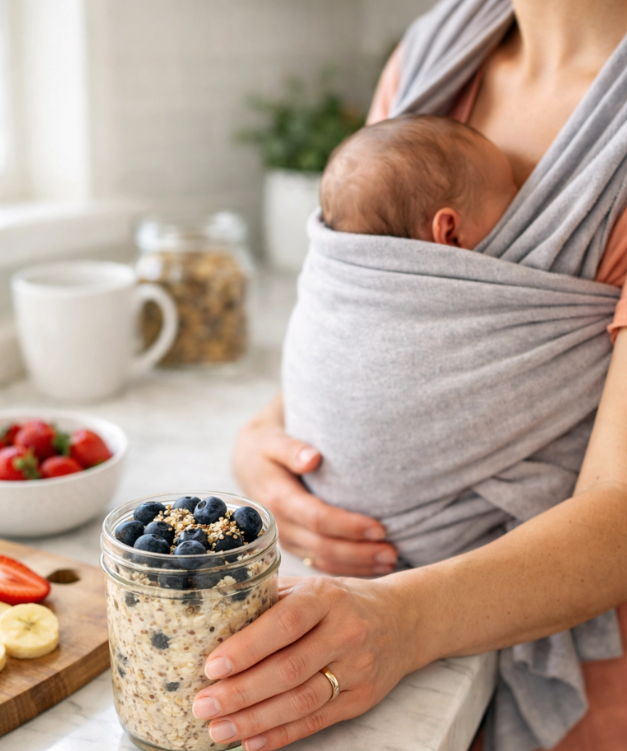
Healing After Birth Nutrition: Your Grocery List
If you’re sending your partner or a night nurse atlanta to the store, here are the heavy hitters you want in your cart:
Blueberries and Blackberries: High in Vitamin C to help with collagen synthesis and tissue repair.
Spinach and Kale: (Sautéed, not raw!) For iron and folate.
Eggs: Choline is essential for your brain health and for the baby's development if you're nursing.
Oats: A classic for a reason: they are soul-warming and can help with milk supply.
Salmon: For those anti-inflammatory Omega-3s.
If you’re struggling with the logistics of feeding yourself, check out our guide on feeding challenges to see how you can balance nutrition with the realities of infant feeding.
Meal Prep for New Moms: Hacks for the Exhausted
Let's be real: you probably don't have time to simmer a bone broth for twelve hours right now. Meal prep for new moms needs to be about efficiency and survival.
The One-Handed Rule: If you can’t eat it with one hand while holding a baby, it’s probably not going to happen during the day. Think burritos, energy balls, or pre-cut fruit.
Double the Batch: If you (or your support system) are cooking dinner, always make twice as much. Future you will thank you when you’re staring into the fridge at 2:00 PM the next day.
The Freezer is Your Best Friend: Stock up on high-quality frozen veggies and pre-marinated proteins.
Accept the "Meal Train": When people ask "What can I do?", send them a link to your favorite local delivery or ask for a specific nutrient-dense soup.
Hydration: The Unsung Hero
You are likely thirstier now than you’ve ever been in your life. If you’re breastfeeding, your body is moving a massive amount of fluid every day. But drinking plain water can sometimes feel like a chore.
Try "Adrenal Creamsicles" or electrolyte drinks. Mix coconut water, a splash of orange juice, and a pinch of sea salt. It helps replenish your minerals and keeps you from feeling like a shriveled-up sponge.
When You Need More Than Just a Good Meal
We can talk about the postpartum recovery diet all day, but the truth is, if you aren't getting any sleep, your body will struggle to heal no matter how many blueberries you eat.
Sometimes, the best thing you can do for your nutrition is to get enough help so that you actually have the time to eat and sleep. This is why many families in Georgia look into a nighttime doula or overnight newborn care. Having a professional handle the nighttime infant care means you can wake up, have a nutritious breakfast that someone else prepared, and actually feel human again.
If you’re in the Atlanta area and feeling like you’re drowning, a night nurse atlanta can be the bridge between "barely surviving" and "actually thriving." It’s not just about the baby; it’s about making sure you have the capacity to recover.

Be Gentle With Yourself
Mama, your body just performed a literal miracle. It took nine months to grow that baby; it’s going to take more than a few weeks to feel like yourself again. If you have a day where you eat nothing but toast and coffee, don't beat yourself up. Tomorrow is a new day.
Focus on small wins. A cup of bone broth here. A handful of walnuts there.
If you're feeling overwhelmed by the transition to parenthood, you aren't alone. We have a whole community of parents going through the exact same thing. Sometimes just knowing that someone else is also eating cold pasta over the sink at midnight makes the whole thing feel a little more manageable.
You’re doing a great job. The fog will lift, the healing will happen, and eventually, you’ll eat a meal with two hands again. Until then, stay hydrated, eat the warming foods, and don't be afraid to ask for the support you deserve.
Your intuition is your best guide, and this phase: as exhausting as it is: is only temporary. You've got this.