Baby-Led Weaning vs. Purees: Finding the Right Approach for Your Family
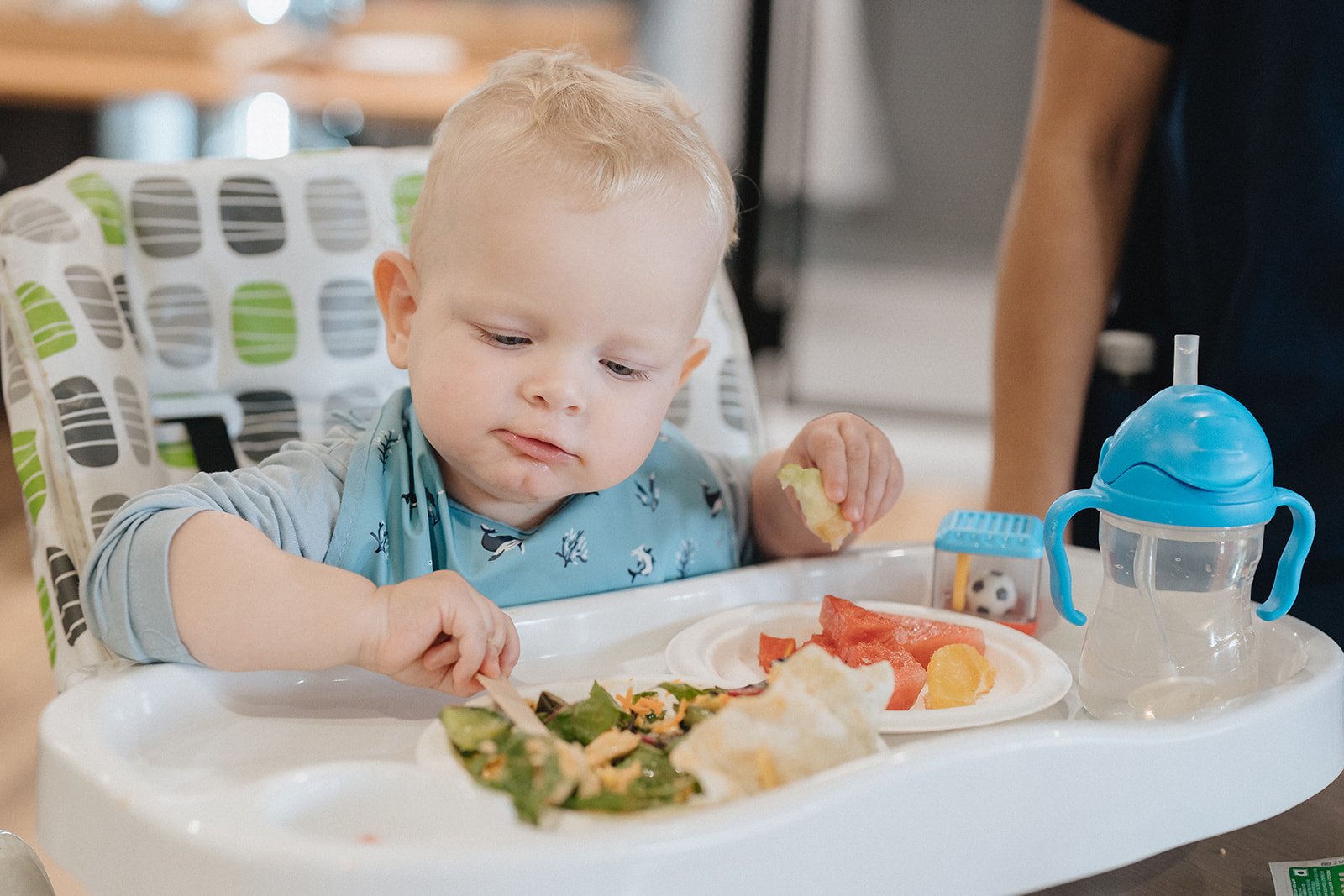
Around the time your baby starts eyeing your dinner plate, the feeding debates online can make the decision feel enormous. Baby Lead Weaning parents talk about texture tolerance and autonomy. Puree parents point to portion control and ease. And somehow, both camps manage to make the other feel like they're doing irreparable damage over a bowl of squash.
At Rested Co., we work with families through those first months when every decision feels high-stakes and sleep is a distant memory. So let us say something that might actually make you exhale: there is no single correct answer here. The best approach is the one that works for your baby, your schedule, and your sanity.
That said, knowing what each method actually involves, and what the research says, helps you make a choice with confidence rather than anxiety.
What each method actually means
Baby-led weaning (BLW) skips purees entirely. Starting around 6 months, you offer age-appropriate soft foods in pieces your baby can grab themselves. Think steamed broccoli florets, soft-cooked pasta, strips of ripe avocado. The baby decides what goes in their mouth, how much, and when to stop. Gagging is normal and expected. Choking is different and rare, especially when you know what to watch for.
Purees are what most of our parents grew up eating. You prep smooth foods and spoon-feed your baby, or let them try self-feeding with a loaded spoon once they have the coordination for it. The textures gradually thicken as their oral skills develop. It's more controlled, easier to track intake, and generally less laundry-intensive than BLW.
Baby-led weaning
Starts around 6 months with developmental readiness
Baby controls intake from the start
Builds texture tolerance early
Family eats the same foods (mostly)
Messier, needs more supervision
Harder to track exact intake
Purees
Can start between 4 to 6 months
Easier to gauge how much baby ate
Gentler introduction for hesitant eaters
Works well with premature or low-weight babies
Requires separate meal prep
Texture progression needs intentional pacing
What the research actually shows
Studies comparing the two approaches have found that babies who do BLW tend to have slightly better appetite self-regulation and accept a wider range of textures later. Puree-fed babies sometimes need more intentional exposure to lumpy and solid textures down the road if the transition is delayed too long.
On the other hand, research has not shown BLW to be clearly superior for nutrition, weight outcomes, or overall feeding development when purees are introduced with texture progression in mind. The real risk with purees is sticking with them too long, not starting them in the first place.
Every baby is different, and what works beautifully one week may need a little tweaking the next. Staying flexible and tuning in to your baby's cues is one of the kindest things you can do for both of you.
Signs your baby is ready to start solids
Regardless of which approach you choose, readiness matters more than age. The general guidance is around 6 months, but watch for these physical cues:
Sits upright with minimal support
Lost the tongue-thrust reflex
Shows interest in food
Brings objects to mouth
Has doubled birth weight
Good head control
Your pediatrician should confirm readiness at the 4 or 6 month visit. If your baby was premature, your doctor may adjust these timelines based on corrected age.
Why most families end up doing bot
Here's the honest truth: a hybrid approach is what happens in most households, not because parents gave up on their original plan, but because babies are unpredictable and one method rarely covers everything.
You might do purees for breakfast because it's faster and you have a 7 a.m. meeting, then offer strips of banana and soft scrambled egg at lunch while your baby explores. You might puree the meat and serve the vegetables as finger food. That's not failure. That's practical parenting.
The families who tend to struggle most are not the ones who chose the "wrong" method. They're the ones who rigidly stuck to one approach when their baby was clearly asking for something different.
A few things nobody mentions worth knowing before you start
Gagging is not choking. It's a protective reflex that's actually more active in babies who are learning with whole foods. Learn the difference before you start, and you'll feel much calmer at mealtimes.
Intake is unpredictable and that's fine. Breast milk or formula is still the primary nutrition source until 12 months. Food before one is genuinely for exploration and practice, not calories.
Solid foods can affect sleep. Some babies sleep better with solids introduced; others get gassier and sleep worse initially. If you're already struggling with night sleep, it helps to have support during this transition period.
Early allergen introduction is now recommended. Peanut, egg, tree nuts, and other common allergens should be introduced intentionally around 6 months unless your doctor advises otherwise, as research shows early exposure reduces allergy risk.
Your stress around feeding is contagious. Babies pick up on anxiety quickly. A calm, curious approach to mealtimes makes a bigger difference than the specific method you choose.
Our honest take
We'll be upfront, we're not here to convince you of anything. What we've seen time and again, walking alongside families through those first messy, wonderful months, is that your confidence as a parent counts for far more than any technique. Trust yourself, watch your baby, and you'll find your way with or without a spoon in hand.
If you're anxious about it, that anxiety is worth paying attention to. Are you anxious because the information online is overwhelming and contradictory? That's normal. Are you anxious because your baby has reflux, feeding challenges, or a complicated birth history? That warrants a conversation with a feeding specialist or your pediatrician before you start.
And if you're in those early weeks before solids are even a thought yet, still waking every 90 minutes and wondering how you'll make it to 6 months, that's a conversation we're very familiar with too.
The early months can be a lot. And it's okay if some days you're just doing your best to get through them.