The Ultimate Baby-Proofing Checklist for Homes with Multiple Children
Baby-proofing the first time around is a whole project. You go room by room, install the cabinet locks, cover the outlets, anchor the bookshelves, and feel reasonably confident that your home is no longer a hazard course.
Then your second (or third) baby arrives, and you realize something humbling: a toddler is approximately the world's most enthusiastic baby-proofing saboteur.
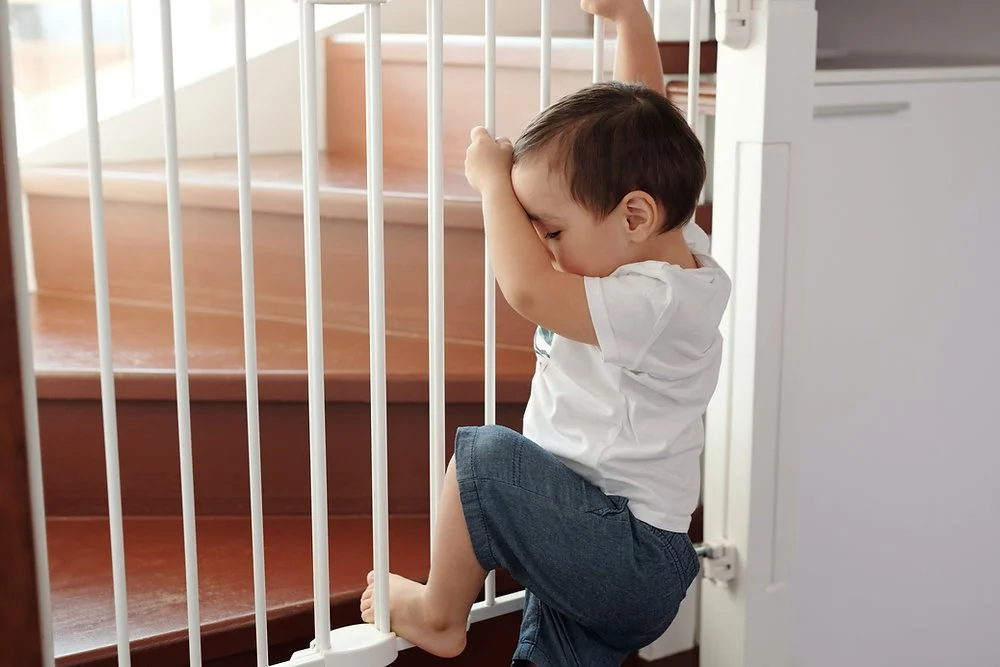
They unlock the cabinet locks because they have watched you do it fifty times and are very clever. They leave small toys on the floor without a second thought. They hand the baby things they absolutely should not have. They open the gate you installed and forget to close it, every
single time, while making direct eye contact with you.
Baby-proofing a home with multiple children is a genuinely different challenge than doing it for your first. It is not just about hazards in the environment. It is about hazards that move, that learn, and that love the new baby very sincerely while also creating constant danger for
them. This checklist is built for that reality.
BEFORE YOU START: THE MINDSET SHIFT
With a first baby, you are removing hazards from a static environment. With multiple children, the environment is alive. Your older kids' belongings, behaviors, and energy are variables you cannot fully control, only plan around.
That means the goal is not a perfectly sanitized home. It is layered protection: physical barriers, age-appropriate conversations with older kids, and consistent habits that make safety the default rather than the exception.
Two principles to keep in mind as you work through this list:
1. HEIGHT CHANGES EVERYTHING. What was safely out of reach for a baby with a first child becomes accessible the moment an older sibling leaves a step stool in the wrong place, pushes a chair to a counter, or helpfully "shows" the baby something interesting from a high shelf.
2. OLDER KIDS ARE PARTNERS, NOT JUST HAZARDS. Children who understand why something is dangerous are meaningfully safer than children who have simply been told no. More on this throughout the list.
ROOM BY ROOM CHECKLIST
LIVING ROOM AND COMMON AREAS
Anchor all furniture to the wall. This is non-negotiable and more urgent with multiple children because older kids climb, pull, and lean on furniture in ways that shift it. Bookshelves, dressers,
TV stands, and any freestanding furniture over knee height should be wall-anchored.
Secure the TV. Floor-mounted or stand-mounted televisions tip more easily than people expect. A wall mount is the safest option. If your TV is on a stand, anchor both the stand and the TV.
Audit the floor at crawling height. Get down on your hands and knees and look. You will find things you did not know were there: coins, small toy parts, hair ties, button batteries, pen caps. Do this again after your older kids play. The floor changes hourly.
Create a "baby-safe zone." A gated area or playpen where the baby can be on the floor without you needing to supervise every single older sibling interaction is genuinely useful, not a cop-out. It gives the baby protected floor time and gives older kids a visual boundary.
Relocate older kids' small toys. LEGO, magnetic tiles, small figures, game pieces, puzzle pieces, marbles, and anything with parts smaller than a toilet paper roll tube are serious choking hazards. Establish a room or area where these toys live, with a rule that they stay there. Make it the fun room, not the forbidden room.
Cover all accessible electrical outlets. Replace standard covers with sliding plate covers that require two simultaneous actions to open, which small children cannot coordinate. Basic plug covers can actually be a hazard themselves since older children can remove them and leave them on the floor.
Remove or secure low coffee table corners and edges. Add edge guards to sharp corners on furniture at baby head height.
Check cords. Window blind cords, lamp cords, and charging cables are strangulation risks. Cord winders, cord clips, and cordless blinds are all worth the investment.
Move houseplants. Many common houseplants are toxic if ingested. Pothos, philodendron, peace lily, dieffenbachia, and aloe vera are all on the list. Either move them out of reach (which, again, is complicated in a multi-child home) or move them out of the house.
KITCHEN
Use appliance locks on the oven, refrigerator, and dishwasher. An older child who can open appliances and does not always think to close them properly creates a risk for a crawling baby behind them.
Lock lower cabinets, especially those with cleaning products, sharp objects, or heavy items. Be honest about which ones get left unlocked "just for a second."
Move knives, scissors, graters, and sharp tools to upper drawers or locked drawers. Not just out of the lower cabinets. Out of any drawer that older children can access unsupervised.
Keep cleaning products, dishwasher pods, laundry pods, and all chemicals in a locked cabinet. Laundry and dishwasher pods deserve their own line item because they are extremely dangerous and colorfully packaged in a way that attracts children.
Use back burners when possible. Turn pot handles toward the back or side of the stove. Consider a stove knob cover for the front burner knobs.
Think about the step stool. If older children use a step stool at the counter, decide where it lives when not in use. A step stool left next to a counter becomes a ladder for a baby who is learning to pull up.
Do not leave small items on low surfaces after meals. Grapes, cherry tomatoes, nuts, popcorn, and small candies are choking hazards. The table after a family meal often has these scattered within reach.
BATHROOMS
Install toilet locks on all toilets. Toddlers and young babies can drown in a toilet. Older kids who forget to put the lid down are a real variable here.
Keep bathroom doors closed, always. This is easier said than done in a house with multiple children moving in and out constantly. A door alarm or door knob cover that older children can operate but babies cannot is a useful backup.
Lock medicine cabinets. All of them, not just the one in the master bathroom. Even children's vitamins can be dangerous in large doses. Even "harmless" over-the-counter medications are not harmless when a toddler gets into them.
Move all medications to a high, locked location. Not just locked. High and locked. Purses and diaper bags with medications inside them also count.
Drain the bathtub immediately after use. A baby can drown in two inches of water. An older child who finishes their bath and wanders off leaving water in the tub is a scenario worth planning for.
Keep hair tools unplugged and stored. A flat iron left on the counter stays hot for a long time after it is turned off.
Use non-slip mats inside and outside the tub.
BEDROOMS AND NURSERY
Keep the baby's sleep space clear. No pillows, bumpers, positioners, loose blankets, or stuffed animals in the crib. This matters even more with older children around, because they will want to share their things with the baby, including stuffed animals and blankets. Have this conversation clearly and often.
Anchor the dresser and any furniture in older kids' rooms too. They climb. Especially at night when you are not watching.
Check what older kids keep in their rooms. Small toys, craft supplies, coins, batteries, jewelry, and hair accessories all make their way to floors and become hazards if the baby ends up in that room.
Keep the nursery door closeable. A door that the baby cannot open but older children can is a reasonable first line of overnight defense while you are figuring out sleep logistics.
Secure window blind cords and window guards. Upper floor windows are a priority.
STAIRS AND TRANSITIONS
Install hardware-mounted gates at the top and bottom of all staircases. Pressure-mounted gates are not safe at the top of stairs. Hardware-mounted only.
Teach older children to close gates every time. Not most of the time. Every time. Make it a non-negotiable part of the routine, the same way they buckle their seatbelt. It will take repetition. That is okay.
Check gate hardware regularly. Older children pushing through gates quickly, leaning on them, or swinging on them loosens hardware over time. Tighten screws monthly.
Consider a gate at the door of rooms with higher hazards (the baby's room, the room with older kids' small toys, the home office or craft room).
GARAGE, LAUNDRY, AND UTILITY SPACES
Treat the garage as a locked room. It contains tools, chemicals, sharp objects, and heavy items. A door that babies and young children cannot open independently is the minimum standard.
Store all chemicals, paint, fertilizer, pesticides, and automotive fluids in locked storage or on high shelving.
Keep the washer and dryer closed when not in use. Front-loading washers are a drowning hazard. Many newer machines have door locks; use them.
Lock the door between the house and the garage.
THE OLDER SIBLING CONVERSATION
No checklist covers this completely, because it is not a physical fix. But it matters as much as any gate or lock you install.
Children who understand why something is dangerous behave more safely than children who have simply been told not to touch something. This does not mean a graphic explanation. It means an honest, age-appropriate one.
Some things that actually work:
Give older kids a job. "You are the baby's safety helper. One of your most important jobs is making sure small toys stay in your room." Kids who feel responsible for something take it more seriously than kids who are just told to comply.
Be specific, not vague. "Do not give the baby small things" is less effective than "Anything that fits inside this cup is too small for the baby and could get stuck in their throat." Show them the cup.
Let them test things.
Avoid shame when they forget. They will forget. They are children.
Correct it calmly and move on. Shame makes kids defensive; calm correction builds habits.
Acknowledge that it is a lot of rules. It is. Telling them that you know it is a lot, and that it is because you love the baby and trust them to help keep the baby safe, goes further than pretending the rules are not demanding.
A NOTE ON SLEEP AND SAFETY
We talk about sleep at Rested for obvious reasons, but there is a safety dimension to it that does not get enough attention: exhausted parents make more mistakes.
When you are running on broken sleep with a newborn and one or more older children, the cognitive bandwidth available for monitoring hazards, supervising sibling interactions, and staying consistent with safety rules is genuinely reduced. This is not a character flaw. It is
physiology.
One of the most meaningful safety investments you can make in those early months is making sure you are getting enough rest to actually be present. That might mean leaning on a partner, family, or a trusted overnight specialist during the hardest weeks, so that during the hours you are on, you are actually on.
Baby-proofing the physical environment is one layer. You being rested enough to catch the thing that slips through is another.
QUICK REFERENCE: HIGH-PRIORITY ITEMS FOR MULTI-CHILD HOMES
If you are short on time and need to know where to start, these are the highest-impact items specifically for homes with multiple children:
Small toy containment system (designated room, consistent rule)
All furniture anchored, including in older kids' rooms
Hardware-mounted stair gates, with older kids trained to close them
Laundry and dishwasher pod storage locked
Button battery awareness (remotes, key fobs, small electronics)
Older siblings as active safety partners, not just managed hazards
Medicine and vitamins locked and stored high
Baby sleep space kept clear of sibling gifts and shares
You, getting enough sleep to be the last line of defense when needed
You are keeping a lot of plates in the air right now.
Those early months with a new baby and older children at home are a particular kind of full. We are here to help with the overnight piece, so the hours you are asleep are actually covered, and the hours you are awake, you are actually rested.
Book a free consultation: restedco.com/get-started
Call us: +1 470-828-3444
Rested Co. | Atlanta's Premier Overnight Infant Care | restedco.com