The Second Baby Is Different: What Surprised Our Clients Most the Second Time Around
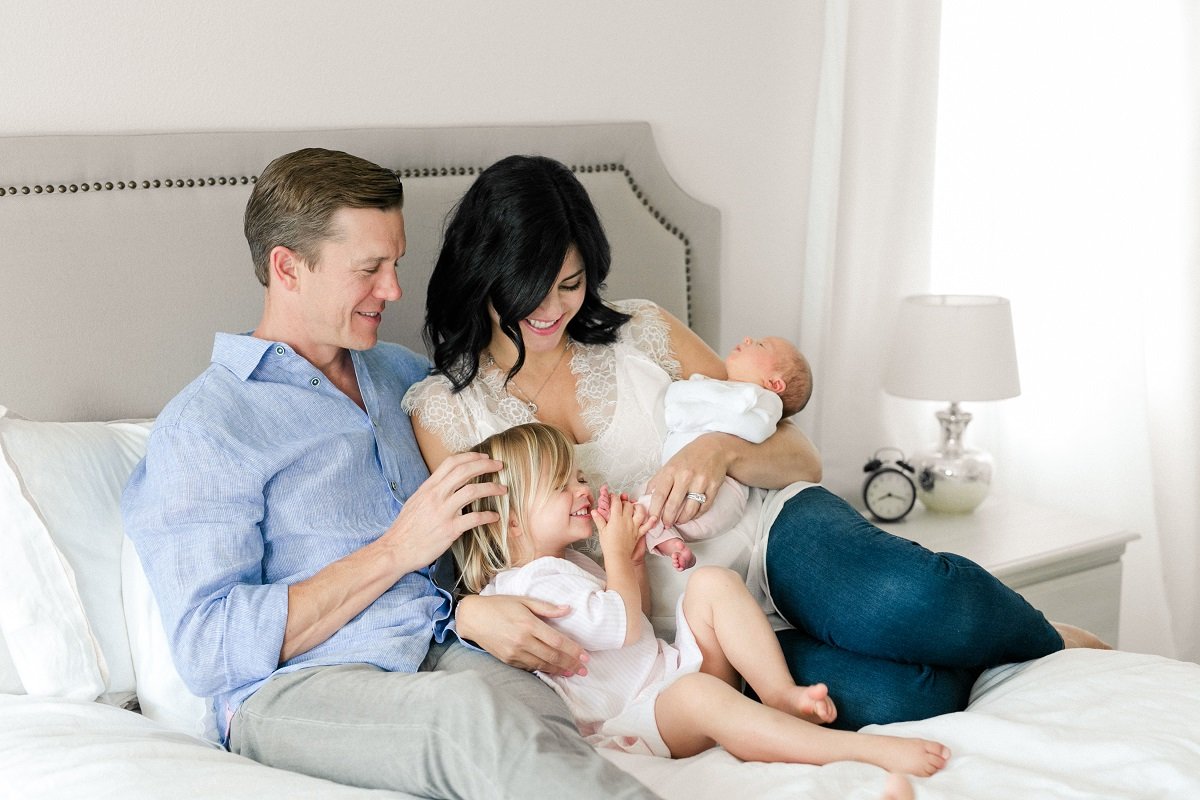
The families we work with often tell us the same thing before their second baby arrives: "This time will be easier."
And they do. They really do. They know how to swaddle, how to read a hunger cue, how to survive on less sleep than seems humanly possible. First-time parents spend months learning. Second-time parents show up with that hard-won knowledge already in hand.
But almost every one of them also tells us, a few weeks in, that something caught them off guard.
Experience changes the hard parts. It doesn't remove them.
With a first baby, the challenge is the unknown. Every cry is a question you don't know how to answer yet. The learning curve is steep, and the stakes feel enormous.
With a second baby, the unknown is mostly gone. But something else takes its place: the sheer logistics of caring for a newborn while also caring for a toddler or older child, managing a household that doesn't pause, and recovering postpartum while everything keeps moving.
We knew the baby part. We didn't know the rest.
The guilt that no one really prepares you for
One thing we hear from second-time parents more than almost anything else: the guilt is different.
With the first baby, guilt tends to show up around uncertainty. Am I doing this right? Is this normal?
With the second, it gets more specific. It shows up when the toddler is standing in the hallway while you're doing a 3am feeding. It shows up when you have to say "in a minute" for the fourth time in an hour. Parents are suddenly dividing their attention between two children who both need them fully, and it's a weight that's hard to prepare for in advance.
Knowing that doesn't make it disappear. But it helps to hear that it's normal, and it's something nearly every second-time parent navigates.
Postpartum recovery gets less attention the second time, not more
With a first baby, recovery is often front and center. Meals arrive. The world slows down. Everyone asks how you're doing.
With a second, parents are often back on their feet much faster, not because recovery is easier, but because the household keeps going and someone has to keep it moving.
What we see, again and again, is that the physical and emotional weight of the postpartum period doesn't shrink just because a parent has been through it before. It just becomes easier to push through and overlook, which is exactly when it tends to catch up with people.
Second-time parents deserve the same quality of recovery support as first-time parents. The busyness of having two kids doesn't make that need any smaller.
Sleep deprivation compounds in ways that are hard to predict
The exhaustion of one newborn is significant. The exhaustion of a newborn plus a toddler is a different experience entirely.
With one child, the days have some give. There are naps. There are quiet stretches. With two, the moments of stillness are much smaller, and the demands keep coming from multiple directions.
This is often when second-time parents reach out to us. Not because they haven't done this before, but because they've done it before and they understand what sustained sleep deprivation actually costs. They've already proven they can get through it. What they want now is to actually be present for it.
What overnight support changes for second-time families
Families who bring in overnight support during the newborn phase often describe the same shift: they wake up with something left. Not unlimited energy, but enough. Enough to be present with the older child in the morning. Enough to take care of their own recovery. Enough to feel like they're not just surviving the early weeks but actually in them.
The second baby is a different experience, and it deserves thoughtful support that accounts for everything going on in the household, not just the newborn.
That is exactly what we are here for.
Rested provides trusted overnight infant care for families in Atlanta and surrounding areas. If you're expecting your second baby and want to talk through how we can support your family, we'd love to connect.