The "Good Mom" Myth: Why Asking for Overnight Help is a Mental Health Win
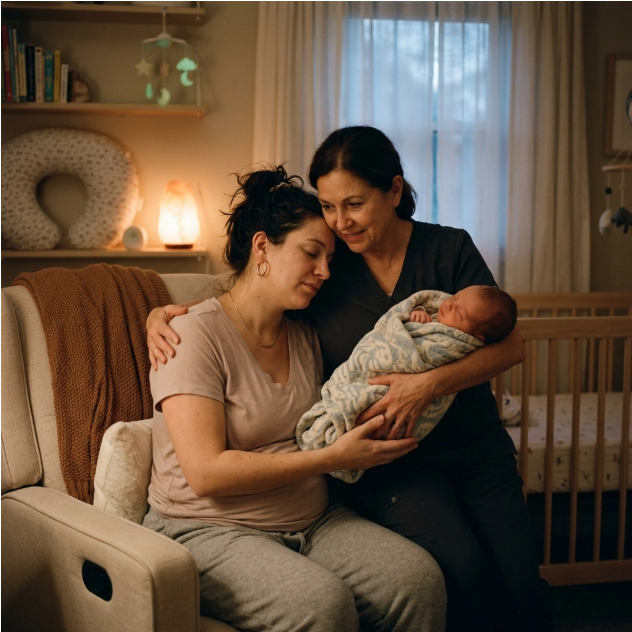
Hey mama. Let’s have a heart-to-heart, just between us.
It’s probably 3:00 AM. Or maybe it’s 2:00 PM and you’re just now realizing you haven't brushed your teeth or drank anything other than lukewarm dregs of coffee. You’re sitting there, rocking a baby who finally, finally, fell asleep, and instead of closing your eyes, you’re scrolling. You’re looking at pictures of other moms who seem to have it all together, and you’re wondering why you feel like you’re drowning.
Why does it feel like everyone else got the "How to be a Natural Pro" manual while you’re just trying to remember if you fed yourself today?
Here is the truth, straight from the trenches: You are currently being haunted. Not by a ghost, but by the "Good Mom" Myth. You know the one. She’s the lady who does it all alone, never loses her cool, and definitely doesn’t need a nighttime doula because she’s "made for this."
Well, I’m here to tell you that the myth is a lie. A big, fat, exhausting lie. And clinging to it isn't making you a better mom; it’s making you a tired, anxious, and burnt-out version of yourself. Asking for overnight newborn care isn't a white flag of surrender. It is a strategic, high-level move for your mental health.
The Martyrdom Trap (And why we’re all stuck in it)
Society loves a martyr. Especially a mothering one. We’ve been conditioned to believe that the more we suffer, the more we love our babies. We think that if we aren't the ones doing every single diaper change, every single rocking session, and every single midnight soothing, we’re somehow failing.
We call it "bonding." But let’s be real: it’s hard to bond when you’re hallucinating from sleep deprivation.
The "Good Mom" Myth says that asking for help is a sign of weakness. It tells you that a "real" mom should be able to handle the postpartum period with nothing but a smile and a high-protein snack. But the reality? Humans were never meant to raise babies in isolation. We were meant to have a village. Somewhere along the way, we traded the village for a Ring doorbell and a Target delivery app, and we wonder why our mental health is in the basement.

Myth vs. Reality: The Postpartum Edition
Let’s break down some of these lies we tell ourselves while we’re staring at the nursery ceiling.
Myth: "I should be able to do this alone. My grandmother had six kids and no help!"
Reality: Your grandmother lived in a community where her sisters, mother, and neighbors were constantly cycling through the house. She didn't have a nighttime doula, but she had a village that wouldn't let her lift a finger for six weeks. You’re trying to do the work of five people by yourself. It’s not a fair fight.
Myth: "If I hire a postpartum doula in Atlanta, I’m missing out on crucial bonding time."
Reality: Bonding doesn't happen during the 4:00 AM breakdown where you’re crying as hard as the baby. Bonding happens when you are rested enough to actually look at your baby and enjoy them. Getting a few nights of solid sleep allows you to be present, patient, and connected during the day.
Myth: "Sleep deprivation is just a rite of passage."
Reality: Sleep deprivation is a form of torture. Literally. It is the primary trigger for postpartum depression (PPD) and postpartum anxiety (PPA). Protecting your sleep isn't a luxury; it’s medical necessity for your brain.
Why Sleep is a Mental Health Essential
Let’s talk about the science for a second (without getting too "textbook" on you). Your brain needs REM sleep to process emotions. When you are waking up every 45 to 90 minutes, your brain never gets to finish its "cleaning cycle."
Imagine your brain is a kitchen. During the day, you’re cooking, spilling, and making a mess. Sleep is the cleaning crew. If the crew only gets 10 minutes to work before they’re kicked out, the grease and grime start to pile up. Eventually, the kitchen is unusable. That "grime" in your brain manifests as irritability, brain fog, and that heavy, dark cloud of the roommate phase where you’re suddenly furious at your partner just for breathing too loudly.
Asking for overnight newborn care is like hiring the world’s best cleaning crew for your mental health. It gives you the 6–8 hour stretch of sleep you need to regulate your hormones and stay on top of your game.
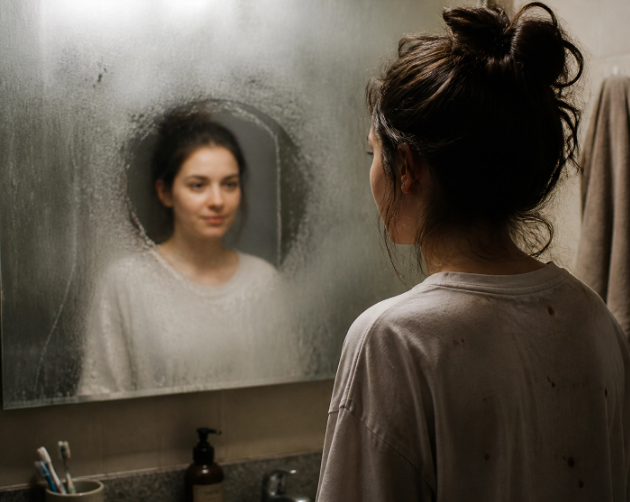
The Atlanta Reality: Why Local Support Matters
Being a mom in Atlanta is a specific kind of vibe. We’ve got the heat, the traffic on the Connector, and the pressure to look "Buckhead-ready" even when we feel like a zombie. Whether you’re a high-powered professional in Midtown or a stay-at-home mama in Virginia Highland, the pressure to "have it all" is intense.
At Rested, we see it every day. Moms feel like they have to "earn" their rest. But here’s a secret: You don't have to earn the right to feel human.
Utilizing a postpartum doula in Atlanta isn't just about someone else holding the baby. It’s about having a professional who understands the unique stresses of your life. Someone who can help you navigate feeding challenges or remind you that self-care isn't selfish.
Shifting the Narrative: From "Help" to "Support"
We need to change the language we use. We often say "I need help," which feels like admitting defeat. Instead, try saying "I am building my support system."
Successful people don't do everything themselves. CEOs have assistants. Athletes have coaches. Why do we think the most important job in the world, raising a human, should be done solo?
Asking for overnight newborn care is an investment in your family's stability. When mom is healthy and rested, the whole house runs better. You’re more likely to have the energy for motor development activities and less likely to fall into the comparison trap.
How to Get the Help You Actually Need
If you’re feeling the weight of the "Good Mom" myth, here is your action plan:
Audit your "Must-Dos": Does the laundry actually need to be folded, or can it live in the basket for a week? (Hint: The basket is fine).
Be Direct: If a friend asks how they can help, don't say "Oh, I'm fine!" Say, "I’d love for you to bring me a hot meal or watch the baby for an hour while I shower."
Check Your Benefits: Did you know that many corporate benefits packages (like Carrot or Progyny) cover postpartum doula services? It’s worth a look!
Book the Pro: Sometimes, you need more than a friend. You need a professional who can handle the nights so you can handle the days.
A Note to the "Second-Time" Mom
If this isn't your first rodeo, you might feel even more pressure. You think, "I did it once, I should be able to do it again." But the second baby is different. You have a toddler to chase now. Your "me time" during naps is gone. The stakes for your mental health are even higher because you have multiple little people depending on you to be okay.
You Are Enough, Exactly As You Are
Mama, hear me: Your value as a mother is not measured by your level of exhaustion.
Being a "good mom" isn't about how much you can endure. It’s about how much love you can give: and you can’t pour from an empty cup. If you are running on fumes, snapping at your partner, and feeling like a shell of yourself, that isn't "good mothering." That’s just survival.
You deserve to thrive. You deserve to enjoy these early days, even the messy, spit-up-covered ones. You deserve to sleep.
So, let go of the myth. Fire the imaginary "Good Mom" police in your head. Reach out, ask for that nighttime doula, and reclaim your sanity. You aren't failing; you’re being smart. You’re being proactive. You’re being exactly the mother your baby needs.
You’ve got this, and we’ve got you. Rest easy, mama. The sun will come up, and you’ll be ready for it.